
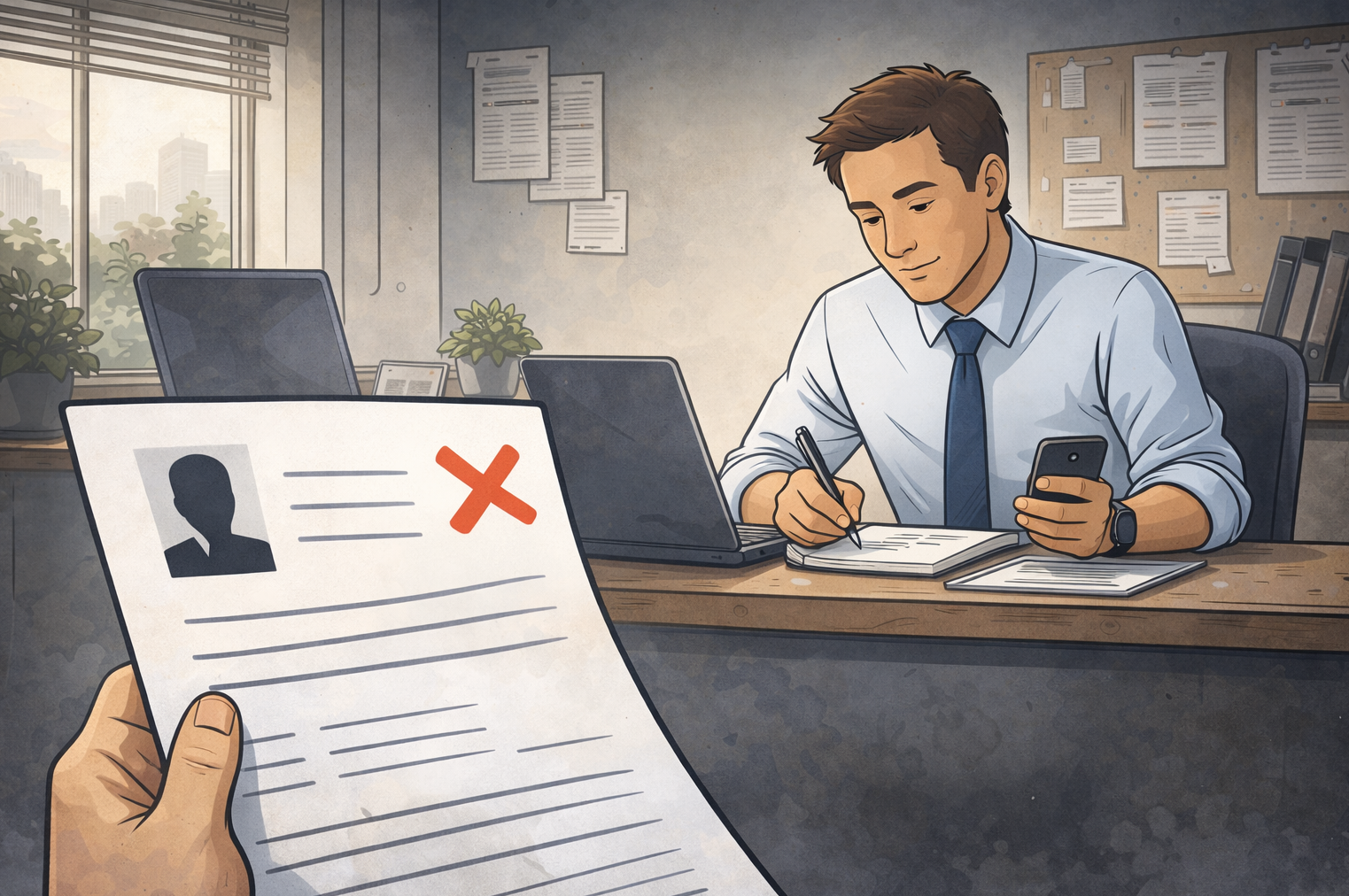
You're probably better at your job than your resume suggests. The hiring manager who rejected you last month is definitely worse at evaluating talent than she thinks. And the person who got the job you wanted is probably not actually better than you — they're just better at interviewing. It's maddening. But there's hope, and it starts with understanding why.
Recent research shows that roughly 70% of employers plan to prioritize candidates with strong soft skills such as communication, adaptability, leadership, and problem-solving. Yet despite that emphasis, very few companies have a structured, consistent way to evaluate those skills before making an offer. The result is a hiring process that optimizes for what's easy to measure and overlooks what actually drives performance. We've built a talent system that can count how many Python repositories someone has on GitHub, but can't tell whether that person can think clearly under pressure, steady a struggling team, or navigate the ambiguity that defines real work. It's not that hiring managers don't care about these qualities. It's that the system was never designed to capture them.
The most important things about you professionally — how you think under pressure, how you motivate a struggling team, how you navigate ambiguity — are completely invisible in every standard hiring process. And until you find a way to make the invisible visible, you'll keep losing to candidates who are worse than you but better at paperwork.
The Resume's Blind Spot
Think about what a resume actually captures. It shows you what someone did — launched a product, grew revenue, managed a team, improved margins. But it never shows how they did it, and the "how" is where all the value actually lives.
Consider two product managers with nearly identical resumes. Both had shipped major products at fast-growing companies. Both had grown their teams from five people to twenty. Both had a track record of driving revenue impact. But they are fundamentally different kinds of professionals:
One succeeded by building deep cross-functional relationships, creating psychological safety in the room, and turning skeptics into collaborators
The other succeeded by being a brilliant individual contributor who could outthink everyone else — but who burned out every team member who worked for him
His tenure at each company was cut short by attrition. Her teams had the lowest voluntary turnover and the highest morale scores. The resume doesn't distinguish between them. And if you were a hiring manager with limited information, you'd probably pick the wrong one.
Make the Invisible Visible
The solution isn't to game the system further — it's to step outside of it and provide the kind of evidence that no resume or interview can capture.
Record yourself leading a meeting. Not a performance — a real meeting, or close to it. Let people hear how you think out loud. How you listen. How you ask questions. How you make space for disagreement.
Document a project retrospective. Walk through a decision you made, what you learned, what you'd do differently.
Have a colleague record a 60-second endorsement of what it's actually like to work with you. Not corporate jargon — just authentic perspective.
Build a portfolio of evidence that shows the qualities that matter most but that no resume or interview can ever capture.
One sales leader started recording short video case studies of deals he'd closed. He didn't lead with revenue numbers. Instead, he walked through the relationship-building process, the objection handling, the creative problem-solving, the moment when a prospect said "I didn't think I needed this until I talked to you."
Those videos became his most powerful career asset. When a company passed on his resume, he sent them a video instead. When another company tried to hire him away, they didn't need to interview him — they already knew how he thought and how he worked. He got hired at a company that had initially rejected his application.
Stop Waiting to Be Discovered
The uncomfortable truth is that you can't rely on the system to see you. The system wasn't built to see you — it was built to sort and filter at scale. Your job is to make sure that the people who matter can actually see what you do and how you do it.
Your real evidence is out there. It's just invisible. And visibility is the only advantage that matters when you're competing against people who are paperwork geniuses but thinking amateurs.
So stop waiting for the hiring process to get better. Stop assuming that if you're good enough, you'll be discovered. Build the evidence. Show your work. Make the invisible visible.
Because the best thing about you isn't on your resume — and the sooner you own that, the sooner you'll stop losing to inferior candidates who mastered the game.