

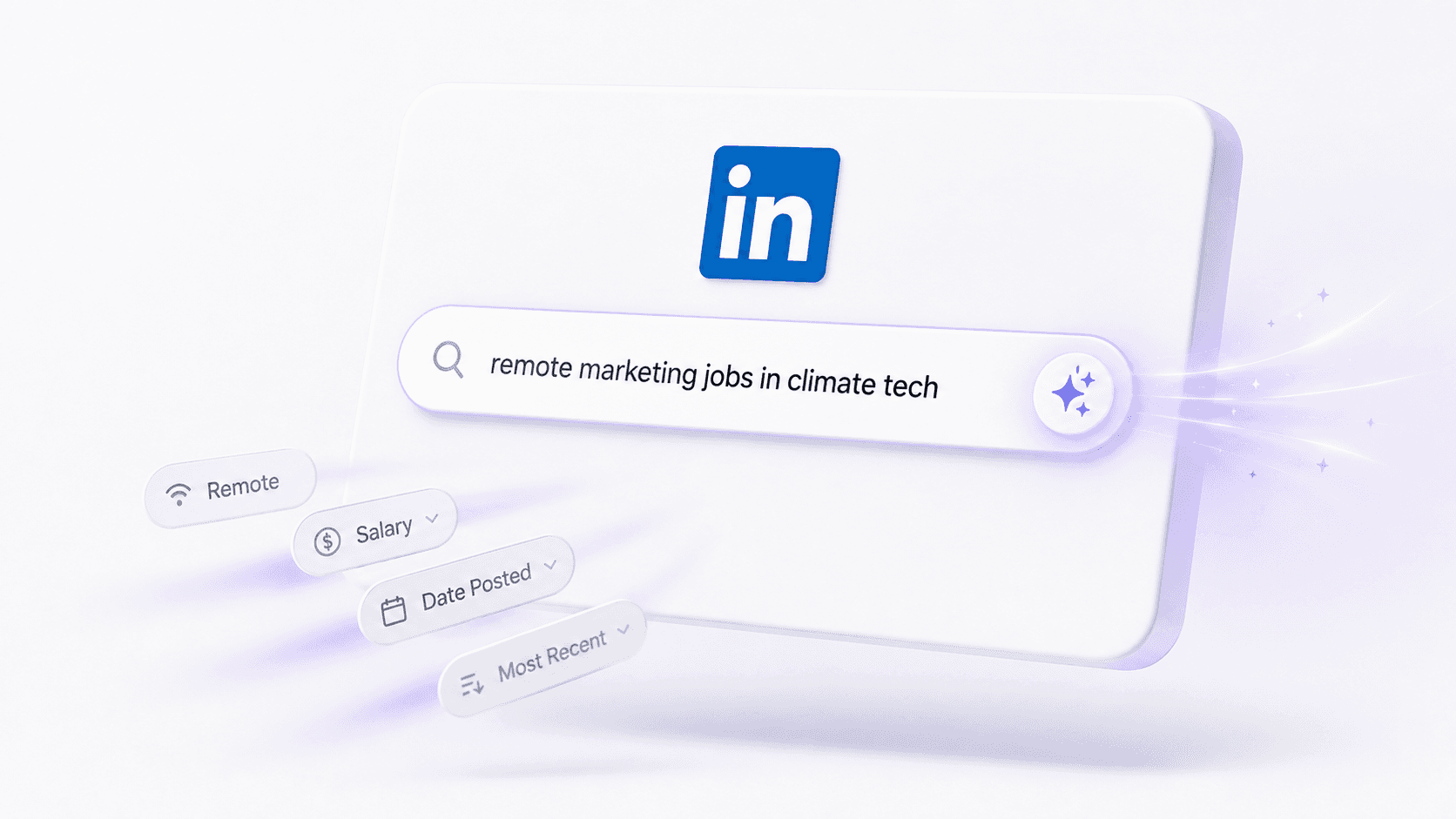
Over the past few weeks, many people opened LinkedIn to find that the filter-based job search they used every day had been replaced by one that takes plain-language queries and interprets them. Job seekers report that filters like salary, remote, location radius, and sort by most recent are gone or no longer behave the way they used to, and that the classic search was removed rather than left as an option.
LinkedIn's bet on natural-language search
LinkedIn launched an AI, natural-language job search to Premium members in mid-2025, pitched as a way to describe what you want in plain English, something like "remote marketing jobs in climate tech that don't require managing a team," and let the system interpret it. It runs on large language models, and LinkedIn framed it as making search simpler and more personal, with early tests it said showed higher engagement. A matching natural-language people search followed later in the year. What's new in the last few weeks is that the AI version became the default for many users and the old filter view got harder to reach.
LinkedIn points to its own numbers to make the case. It says the AI search now runs about 25 million job searches a week, and that job seekers without a four-year degree are 10% more likely to get hired with it.
One job seeker asked LinkedIn's support team to switch back to the classic search. Support confirmed the option is gone.
The ability to switch from AI Search (Beta) back to Classic Search is no longer available, and the previous toggle has been removed as part of the current product experience.
Response from LinkedIn Case Report regarding AI Job Search
by u/Clockwork_Cloak in r/linkedin
The reaction from job seekers
In community forums, a search that used to return a handful of relevant roles now returns hundreds of loosely related ones. "Remote" surfaces hybrid roles several time zones away. The same listings repeat. Saved alerts stop honoring the filters they were built with. One person searching for paralegal roles got attorney listings back. Some longtime subscribers say they've canceled Premium.
LinkedIn just destroyed their search engine and now it's worthless.
by u/Kalbo_8888 in r/linkedin
What was a quick, effective process is now a time-suck of manual garbage filtering.
LinkedIn's AI-job search nearly breaks the job alerts functionality.
by u/KeyFilm1505 in r/linkedin
Casual searchers and power users
Filters and natural-language search are built for different people. Filters only help if you already know the exact words a system indexed on, and they quietly shut out anyone who phrases things differently or doesn't know the jargon. A search you can describe in plain English lowers that bar. For someone browsing casually or new to a field, that can be a real improvement, and betting on it is a defensible call. Coverage of the launch makes the same argument, that dropping the keyword requirement helps the people who never learned which words the system wanted.
The people objecting most had turned search into a system. A precise query, saved and re-run every morning, filtered to the last 24 hours, trusted to surface everything new and nothing else. That routine depends on the search being predictable. Run the same query, get the same rules, see exactly what changed. Interpretation breaks that, and when the system decides what you meant, the control those users built the routine around is the first thing to go.
A hard market raises the stakes
When you're applying to dozens of roles and hearing back on a few, a repeatable search is one of the few parts of the process a candidate still controls. Trading predictability for interpretation is a reasonable bet in the abstract. It lands differently for someone using the tool to hold a stressful search together.
Simple as this - go F*** yourself LinkedIn
by u/SerDunkaDook in r/linkedin
Both things can be true at once. LinkedIn may be right that most people would rather describe a job than filter for one, and early on it has engagement numbers to point to. The power users may be right that they lost a tool they leaned on. A search box is doing a lot of work when it's the main way someone looks for their next job. As more hiring tools move from filters to models, the same tradeoff will keep surfacing. Interpretation is convenient until you need to be certain, and job seekers, more than most users, need to be certain.